- by Mohit Mangal
Solar energy has become an important part of the transition towards cleaner and more sustainable electricity generation. With increasing electricity consumption and growing awareness of renewable energy, homeowners, businesses, and industries are exploring solar power as a practical alternative to conventional energy sources. Solar panels make this possible by converting sunlight into electrical energy through a scientific process known as the photovoltaic effect.
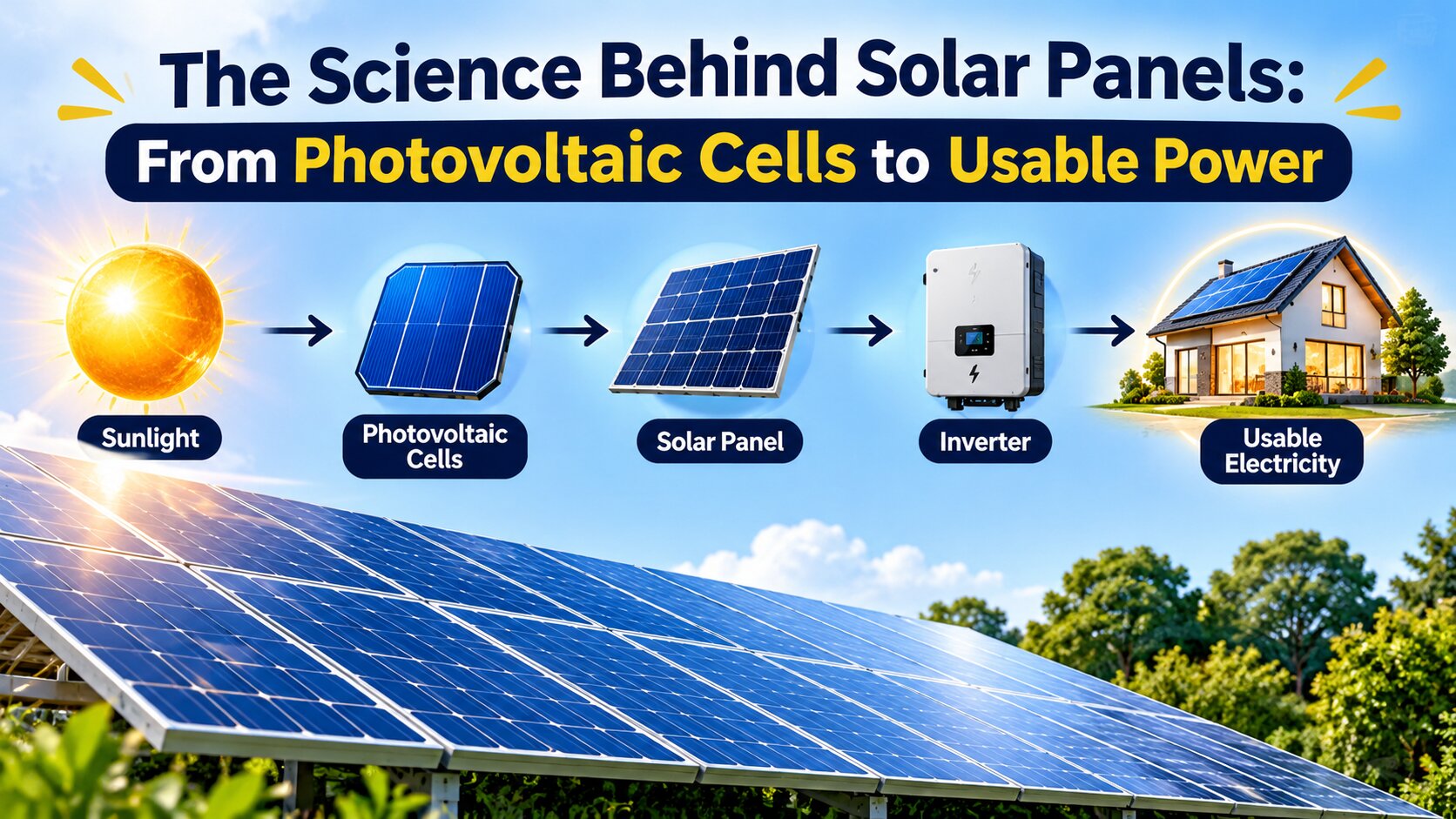
Modern solar technology combines photovoltaic cells, semiconductor materials, electrical connections, inverters, and monitoring systems to generate usable electricity. Understanding how these components work together helps property owners make informed decisions when planning a solar installation. From capturing sunlight to supplying power to electrical appliances, every stage plays an important role in the performance of a solar energy system.
For anyone considering solar installation, consulting a reliable solar panel dealer in Jaipur can help identify suitable products and system configurations according to electricity requirements, available rooftop space, and budget.
Understanding the Science Behind Solar Panels
Solar panels work on the principle of the photovoltaic effect. This process allows certain semiconductor materials to generate electrical energy when exposed to sunlight.
Most commonly used solar panels contain photovoltaic cells made from silicon. These cells absorb sunlight and convert its energy into electrical charges. When sunlight reaches the surface of a solar cell, photons transfer energy to electrons within the semiconductor material.
This movement of electrons creates an electric current that can be collected and used to generate electricity. Multiple photovoltaic cells are connected to form a solar module, while several modules can be combined to create a complete solar panel system.
The efficiency of this process depends on factors such as sunlight intensity, panel quality, temperature, installation angle, and the technology used in manufacturing.
How Photovoltaic Cells Convert Sunlight into Electricity
Photovoltaic cells are the primary components responsible for electricity generation in solar panels. Their construction and material properties allow them to convert light energy into electrical energy.
The electricity generation process involves several important stages.
1. Absorption of Sunlight
When sunlight reaches a photovoltaic cell, its photons are absorbed by the semiconductor material. Silicon is commonly used because of its suitable electrical properties and ability to support photovoltaic energy conversion.
The absorbed light provides energy to electrons within the material.
2. Movement of Electrons
A solar cell generally contains two semiconductor layers with different electrical properties. These layers create an internal electric field that helps separate the electrical charges generated by sunlight.
As electrons gain energy, they move through the semiconductor structure. This movement produces an electrical potential that supports current generation.
3. Generation of Direct Current
The electrical charges are collected through conductive contacts connected to the solar cell. When an external circuit is connected, electrons flow through it and produce direct current (DC) electricity.
A single photovoltaic cell generates a relatively small amount of electricity. Therefore, multiple cells are connected to produce the required voltage and power output.
4. Conversion into Usable Electricity
Most household and commercial electrical appliances operate using alternating current (AC). Solar panels generate DC electricity, so an inverter is required to convert it into AC power.
This conversion makes solar-generated electricity suitable for everyday electrical applications.
Different Types of Solar Panel Technologies
Solar panel technology has developed significantly over the years. Different panel types offer different efficiency levels, construction methods, and performance characteristics.
Monocrystalline Solar Panels
Monocrystalline panels are manufactured using silicon wafers produced from a single crystal structure. They are generally recognised by their dark appearance and high efficiency.
These panels are suitable for installations where rooftop space is limited and higher power generation per unit area is preferred.
Polycrystalline Solar Panels
Polycrystalline panels are manufactured using silicon crystals formed through a different production process. They generally have a blue appearance and may offer a lower efficiency level compared with many monocrystalline products.
Their suitability depends on installation requirements, available space, product specifications, and overall project cost.
Thin-Film Solar Panels
Thin-film panels use thin layers of photovoltaic materials deposited onto a supporting surface. They can be lightweight and flexible, depending on their construction.
These panels are used in certain specialised applications where conventional crystalline panels may not be the most suitable option.
The Role of Inverters in Solar Power Generation
Solar panels generate direct current electricity, but most electrical appliances require alternating current. The inverter performs this important conversion.
A solar inverter also helps manage the electricity produced by the panels and supports the operation of the overall system.
Different inverter technologies are available according to system requirements.
- String Inverters: These connect multiple solar panels in a series configuration and convert their combined DC output into AC electricity.
- Microinverters: These are installed at individual panel level and convert DC electricity into AC power.
- Hybrid Inverters: These support solar power systems that include battery storage and can manage electricity from different sources.
Choosing the right inverter depends on the system capacity, electrical requirements, battery configuration, and installation design.
How Solar Panel Systems Supply Electricity to Homes and Businesses
A complete solar energy system includes more than photovoltaic panels. Different components work together to generate, convert, distribute, and manage electricity.
During daylight hours, solar panels capture sunlight and produce DC electricity. The inverter converts this electricity into AC power for compatible electrical loads.
In a grid-connected solar system, electricity can be used within the property, while excess generation may be exported to the electricity grid according to applicable regulations and net-metering arrangements.
In an off-grid system, batteries store electricity for use when sunlight is unavailable. Hybrid systems combine grid connectivity and battery storage, depending on their configuration.
A professional solar EPC dealer in Jaipur can help plan these components, assess site conditions, determine system capacity, and coordinate installation according to the property's energy requirements.
Factors That Influence Solar Panel Performance
Solar panel electricity generation depends on several environmental and technical factors. Understanding these factors helps property owners maintain better system performance.
Sunlight Availability
The amount of sunlight received by solar panels directly influences electricity generation. Locations with good solar exposure generally provide favourable conditions for solar installations.
Installation Direction and Angle
The direction and tilt of solar panels influence how effectively they receive sunlight throughout the day. Proper positioning helps improve energy generation according to the geographical location.
Temperature Conditions
Solar panels require sunlight to generate electricity, but excessive heat can affect their efficiency. Selecting suitable products and ensuring proper ventilation can help manage temperature-related performance changes.
Dust and Dirt Accumulation
Dust, bird droppings, and other surface deposits can block sunlight from reaching photovoltaic cells. Regular cleaning helps maintain the panel's ability to absorb sunlight.
Shading
Shadows from nearby buildings, trees, or other structures can reduce electricity production. A proper site assessment helps identify shading issues before installation.
Major Benefits of Solar Energy Systems
Solar power offers several advantages for residential, commercial, and industrial users.
Reduced Electricity Expenses: Solar systems can help reduce dependence on grid electricity by generating power directly from sunlight.
Renewable Energy Source: Sunlight is naturally available and can be used to generate electricity without consuming conventional fuel resources.
Lower Environmental Impact: Solar electricity generation does not involve direct fuel combustion during operation, helping reduce operational carbon emissions compared with fossil-fuel-based electricity.
Long-Term Energy Planning: Solar installations can support better electricity cost planning over their operating life.
Multiple Applications: Solar systems can be installed on residential rooftops, commercial buildings, industrial facilities, and other suitable locations.
Why Professional Solar Installation Matters
A properly designed solar system requires technical planning, suitable equipment, electrical safety measures, and correct installation practices.
Before installation, professionals generally assess rooftop space, structural conditions, electricity consumption, shading, and available grid connectivity.
They also help determine the appropriate solar capacity, panel configuration, inverter specifications, and mounting arrangements.
Working with the best solar company in Jaipur can help property owners access professional guidance for system design, equipment selection, installation, and maintenance support.
It is also important to check product warranties, applicable government policies, installation standards, and after-sales service before finalising a solar project.
Maintenance Practices for Better Solar Panel Performance
Solar panels generally require limited maintenance, but regular inspections can help maintain their performance.
- Clean panel surfaces periodically to remove dust and accumulated dirt.
- Check mounting structures for loose fittings or visible damage.
- Inspect electrical connections and cables through qualified technicians.
- Monitor inverter performance and system generation reports.
- Remove nearby obstacles that may create unnecessary shading.
- Arrange professional inspections when the system shows unusual performance changes.
Following appropriate maintenance practices can help identify issues early and support consistent electricity generation.
Conclusion
Solar panels convert sunlight into electricity through the photovoltaic effect, making renewable energy available for residential, commercial, and industrial applications. Photovoltaic cells capture sunlight, semiconductor materials support electrical charge movement, and inverters convert the generated DC electricity into usable AC power.
The performance of a solar system depends on panel technology, sunlight availability, installation design, inverter quality, and regular maintenance. Understanding these factors helps property owners select suitable equipment and plan their energy requirements more effectively.
By working with an experienced solar panel dealer in jaipur and a professional installation team, customers can make informed decisions about solar technology and develop an energy system that supports long-term electricity requirements.
Frequently Asked Questions
1. What is the photovoltaic effect in solar panels?
The photovoltaic effect is the process through which certain semiconductor materials generate electrical energy when exposed to sunlight. It is the basic scientific principle behind solar electricity generation.
2. How do solar panels convert sunlight into electricity?
Solar panels absorb sunlight through photovoltaic cells. The energy from photons helps release electrons, creating an electrical current that can be collected and converted into usable electricity.
3. Why is an inverter required in a solar panel system?
Solar panels generate direct current (DC), whereas most household and commercial appliances use alternating current (AC). An inverter converts DC electricity into AC electricity.
4. Which materials are commonly used in photovoltaic cells?
Silicon is the most commonly used semiconductor material in conventional photovoltaic cells. Other materials are also used in certain thin-film solar technologies.
5. Do solar panels generate electricity on cloudy days?
Yes. Solar panels can generate electricity during cloudy conditions because some sunlight still reaches their surface. However, electricity production is generally lower than under clear, sunny conditions.