- by Mohit Mangal
Solar energy has become an increasingly popular option for homes, businesses, industries, and commercial buildings looking to reduce their dependence on conventional electricity. A solar panel system captures sunlight and converts it into electrical energy, but the electricity generated by solar panels cannot always be used directly by standard household and commercial appliances. This is where a solar inverter plays an important role.
An inverter is one of the essential components of a solar power system because it converts the electricity generated by solar panels into a form that electrical appliances can use. It also helps manage energy flow, monitor system performance, and improve the overall functionality of a solar installation. Understanding how an inverter works can help property owners make better decisions when selecting a solar energy solution.
When comparing solar solutions, consulting an experienced solar panel dealer in jaipur can help you understand which inverter technology and system configuration may be suitable for your electricity requirements.
What Is a Solar Inverter?
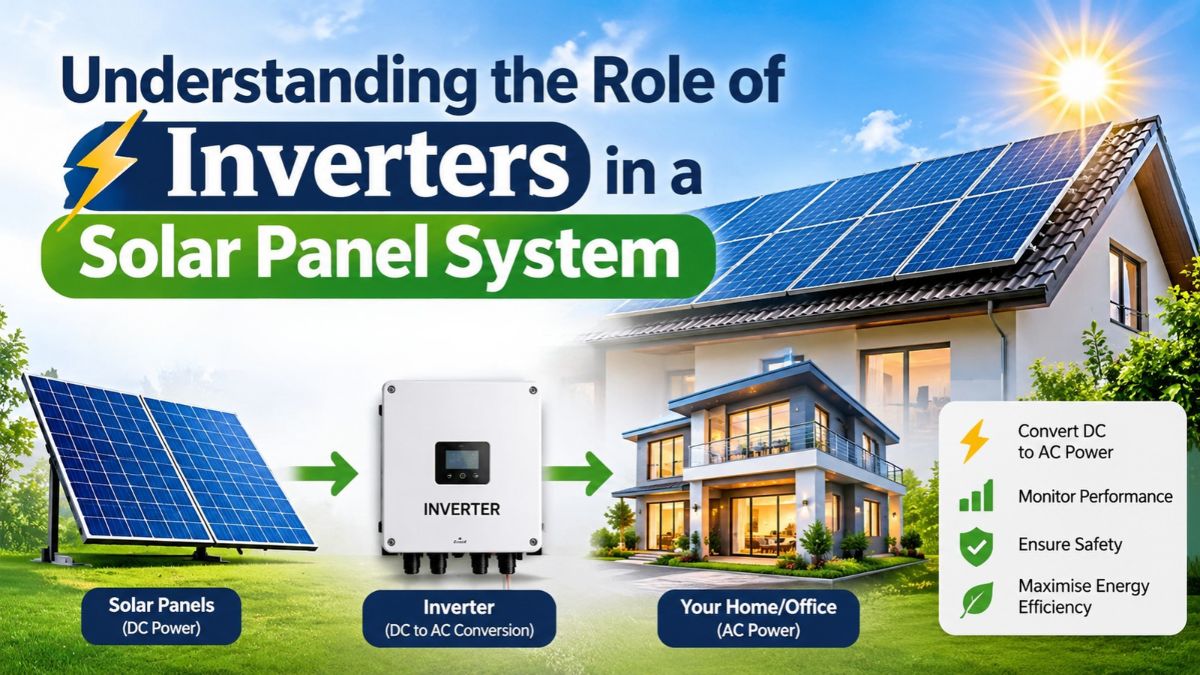
A solar inverter is an electronic device that converts direct current (DC) electricity produced by solar panels into alternating current (AC) electricity. Most electrical appliances, including refrigerators, air conditioners, televisions, computers, lighting systems, and industrial equipment, operate using AC electricity.
Solar panels generate DC electricity when sunlight reaches their photovoltaic cells. The inverter converts this DC power into AC power so that it can be used within a building or supplied to the electricity grid, depending on the system configuration.
Apart from electricity conversion, modern solar inverters perform several additional functions, including monitoring power generation, managing energy flow, identifying certain system faults, and helping optimize the performance of solar installations.
How Does an Inverter Work in a Solar Panel System?
The working process of a solar inverter involves several stages. Each stage helps ensure that the electricity generated by solar panels can be used safely and efficiently.
1. Electricity Generation by Solar Panels
Solar panels contain photovoltaic cells that absorb sunlight and generate DC electricity. The amount of electricity produced depends on factors such as sunlight intensity, panel capacity, temperature, shading, and installation direction.
2. DC Electricity Reaches the Inverter
The electricity generated by the solar panels travels through suitable cables and reaches the inverter. Depending on the system design, multiple solar panels may be connected in a series or parallel arrangement.
3. Conversion from DC to AC
The inverter converts DC electricity into AC electricity using electronic switching circuits. The output is adjusted to match the electrical requirements of the connected appliances or the grid.
4. Electricity Is Supplied for Use
After conversion, the AC electricity can power household appliances, commercial equipment, and other electrical loads. In a grid-connected system, surplus electricity may also be exported to the grid, subject to applicable regulations and system configuration.
5. Performance Monitoring
Many modern inverters include monitoring features that allow users to check electricity generation, system performance, and certain error notifications through a display or mobile application.
Why Is an Inverter Important in a Solar Power System?
An inverter does much more than convert electricity. Its functions influence how effectively a solar panel system operates.
1. Converts Electricity into Usable Power
The primary function of an inverter is to convert DC electricity into AC electricity. Without this conversion, most conventional household and commercial appliances cannot directly use the electricity generated by standard solar panels.
2. Helps Improve Energy Utilisation
Modern inverters use electronic technologies to manage the conversion process and maintain suitable electrical output. Some models also include maximum power point tracking (MPPT), which helps the system operate near the solar array's optimal power point under changing sunlight conditions.
3. Monitors Solar System Performance
Many inverters provide information about daily electricity generation, power output, operating conditions, and system faults. These details help users understand how their solar installation is performing and identify situations that may require technical attention.
4. Supports Grid Connectivity
Grid-tied inverters synchronise the solar system's AC output with the electricity grid. They allow compatible systems to supply surplus electricity to the grid under approved arrangements. These inverters also include protection features that generally disconnect the system from the grid during a power outage to prevent unsafe electricity backfeed.
5. Helps Manage Battery Storage
Hybrid and off-grid inverters can work with compatible battery storage systems. Depending on their design, they manage the charging and discharging of batteries and help supply stored electricity when solar generation is insufficient.
Different Types of Solar Inverters
Solar inverters are available in different configurations. The appropriate option depends on the property's electricity requirements, grid availability, budget, battery needs, and installation design.
1. String Inverter
A string inverter is commonly used in residential and commercial solar installations. Multiple solar panels are connected in a series, forming a string that supplies DC electricity to the inverter.
It is generally suitable for installations where panels receive reasonably consistent sunlight. However, shading or performance differences between panels in the same string can affect overall output, depending on the system design.
2. Microinverter
Microinverters are installed at individual solar panels or small groups of panels, depending on the product design. They convert DC electricity into AC electricity close to where it is generated.
This arrangement can help manage differences in panel performance caused by shading or different roof orientations. Microinverters may also provide panel-level monitoring, although their cost and installation requirements should be considered.
3. Hybrid Inverter
A hybrid inverter combines solar power conversion with battery management capabilities. It can manage electricity from solar panels, batteries, and the grid according to its supported operating modes.
This option may be suitable for property owners who want to use battery storage along with solar generation. The exact backup functionality depends on the inverter, battery compatibility, and electrical installation.
4. Off-Grid Inverter
An off-grid inverter is designed for solar systems that operate independently of the utility electricity grid. It generally works with battery storage to provide electricity when solar panels are not generating enough power.
These systems may be useful in remote locations where grid connectivity is unavailable or unreliable. Proper system sizing is important to ensure that electricity demand can be managed throughout the day and night.
Factors to Consider When Choosing a Solar Inverter
Selecting an inverter requires more than comparing product prices or rated capacities. The following factors can help property owners evaluate their options.
System Capacity: The inverter capacity should be appropriate for the solar panel array and the expected electrical load.
Efficiency Rating: Compare the inverter's efficiency specifications to understand how effectively it converts DC electricity into AC power.
MPPT Technology: Check the number of MPPT trackers and their operating ranges, particularly when panels are installed in different orientations.
Battery Compatibility: If battery storage is planned, confirm that the inverter supports the required battery type and configuration.
Monitoring Features: Mobile applications, generation reports, and fault notifications can make system monitoring easier.
Safety and Protection: Consider features such as overvoltage protection, overload protection, temperature protection, and anti-islanding functionality where applicable.
Warranty and Service: Review warranty conditions, product support, and the availability of qualified technicians.
Role of Inverters During Solar Panel Installation
Inverter selection and placement are important parts of the overall solar system design. During solar panel installation in jaipur, factors such as rooftop conditions, electrical load, sunlight exposure, wiring routes, ventilation, and grid connectivity should be assessed before finalising the inverter.
The inverter should generally be installed in a suitable location with adequate ventilation and protection from excessive heat, moisture, and direct environmental exposure, according to the manufacturer's instructions. Proper cable sizing, earthing, circuit protection, and electrical connections are also necessary for safe operation.
A qualified installation team should check the compatibility of the solar panels, inverter, batteries (if included), and other electrical components. Correct commissioning and testing help confirm that the system is operating as intended.
Common Inverter Problems and Their Possible Causes
Although solar inverters are designed for regular operation, certain conditions may affect their performance.
Overheating: Poor ventilation, high surrounding temperatures, or excessive operating loads may cause an inverter to reduce output or shut down.
Low Solar Generation: Shading, dust accumulation, unsuitable panel orientation, or cloudy weather can reduce the DC power available to the inverter.
Grid-Related Errors: Voltage or frequency fluctuations may cause a grid-connected inverter to disconnect temporarily.
Loose Electrical Connections: Improper connections or damaged cables can create operational and safety problems.
Fault Notifications: Internal faults or abnormal operating conditions may trigger warning messages that require professional inspection.
How to Maintain a Solar Inverter
Regular attention can help maintain reliable inverter operation over time. Keep the surrounding area clean and ensure that ventilation openings are not blocked. Check the monitoring application or inverter display periodically for unusual readings or warning messages.
It is also useful to arrange professional inspections according to the manufacturer's recommendations. Technicians can examine electrical connections, ventilation, protective devices, and system performance. Any recurring error should be investigated rather than ignored.
Choosing the Right Solar Company for Your Installation
A reliable solar installation requires proper planning, suitable equipment, quality components, and professional technical support. Property owners should evaluate a company's experience, product options, installation practices, warranty assistance, and after-sales service before making a decision.
Those looking for the best solar company in Jaipur should consider whether the provider understands residential, commercial, and industrial electricity requirements and can recommend a system based on actual energy consumption.
An experienced solar provider can also explain inverter capacity, grid connectivity, battery options, expected generation, and maintenance requirements. Comparing these details helps customers select a system that supports their long-term energy needs.
For anyone planning a solar project, choosing a dependable solar panel dealer in jaipur and discussing the available inverter technologies can make the selection process more informed. Similarly, professional solar panel installation in jaipur helps ensure that the panels, inverter, and electrical components are properly integrated. Working with the best solar company in Jaipur should involve evaluating technical expertise and service support rather than relying only on promotional claims.
Conclusion
A solar inverter is an essential part of a solar panel system because it converts DC electricity into usable AC power and helps manage the flow of energy. Its additional functions, including performance monitoring, grid synchronisation, and battery management, contribute to the overall operation of a solar installation.
Choosing the right inverter depends on system capacity, electricity consumption, grid availability, battery requirements, and installation conditions. With suitable equipment, professional installation, and regular maintenance, a solar inverter can support the reliable operation of a solar power system for years.
Frequently Asked Questions
1. What is the main function of a solar inverter?
The main function of a solar inverter is to convert the DC electricity generated by solar panels into AC electricity that can be used by household appliances, commercial equipment, or supplied to the grid.
2. Can solar panels work without an inverter?
Solar panels can generate DC electricity without an inverter, but most conventional appliances require AC power. Therefore, an inverter is generally necessary for a standard solar power system designed to operate these appliances.
3. What are the main types of solar inverters?
The main types include string inverters, microinverters, hybrid inverters, and off-grid inverters. Each type is designed for different installation requirements and energy management needs.
4. Does an inverter store electricity?
A standard inverter does not store electricity. Battery storage requires a compatible battery system and an inverter designed to manage charging and discharging.
5. How long does a solar inverter last?
The lifespan depends on its technology, product quality, operating conditions, maintenance, and manufacturer specifications. Inverter warranties and expected service life vary between models