- by Mohit Mangal
India stands at the intersection of two powerful needs—food security and clean energy. With rising population pressure, shrinking farmland, and increasing power demand, traditional solutions alone are no longer enough. This is where agrivoltaics emerges as a game-changing innovation. By combining agriculture with solar energy production on the same land, agrivoltaics is helping India move toward a more sustainable and profitable future.
Whether you are a farmer, investor, or policymaker, the impact of agrivoltaics is becoming too significant to ignore. Even a Solar company in Jaipur today actively explores agrivoltaic models for rural and semi-urban development.
What Is Agrivoltaics?
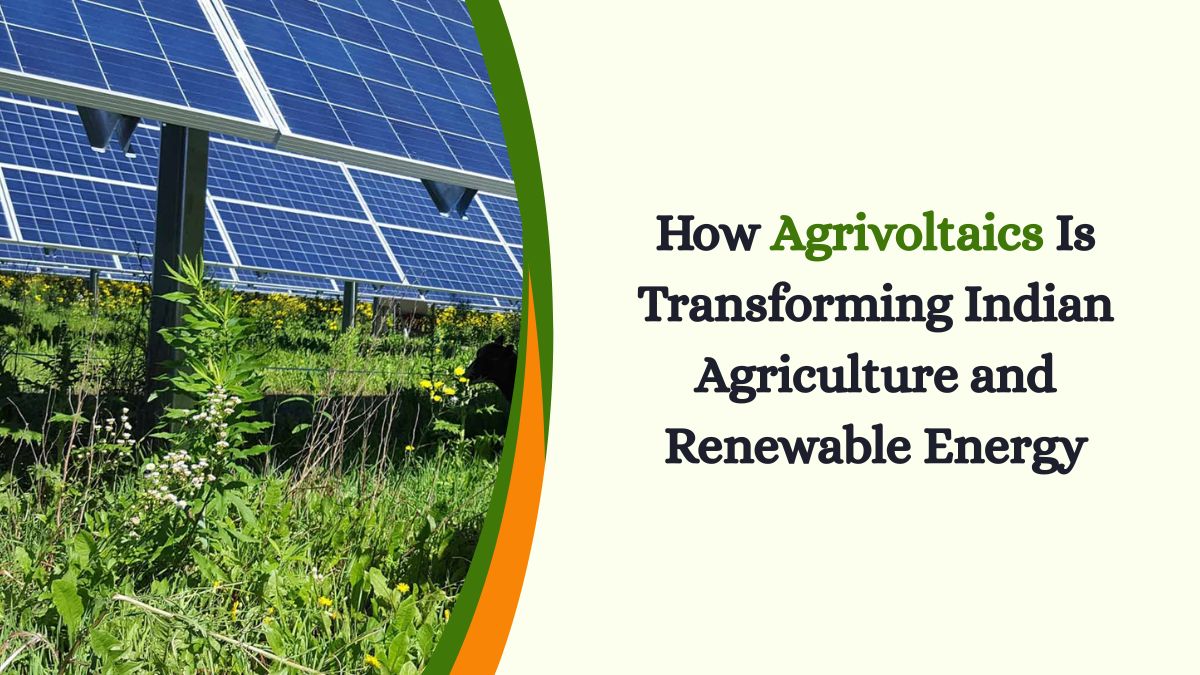
Agrivoltaics refers to the practice of installing solar panels above agricultural crops so that the same piece of land produces both food and electricity. The panels are elevated to allow sufficient sunlight for crops while generating clean solar power simultaneously.
Unlike traditional solar farms that replace farmland, agrivoltaics enhances land productivity. Farmers continue growing crops while earning extra income from power generation—offering financial stability along with environmental benefits.
A leading Solar company in Jaipur has already started promoting agrivoltaic solutions for farmers looking to adopt renewable energy without sacrificing their agricultural livelihood.
Why Agrivoltaics Is Ideal for India
India has over 140 million hectares of agricultural land and receives abundant sunlight throughout the year. This creates a perfect environment for agrivoltaic systems. With climate change affecting rainfall patterns and crop yields, agrivoltaics also helps regulate microclimates beneath solar panels.
Research shows that shade from solar panels can reduce water evaporation and protect crops from extreme heat. Farmers experience improved crop resilience, especially during harsh summers—an important advantage in states like Rajasthan.
A reputed Solar panel company in rajasthan is now actively collaborating with farming communities to deploy such dual-use energy models.
Economic Benefits for Farmers
One of the strongest advantages of agrivoltaics is its income potential. Farmers earn through:
- Traditional crop production
- Leasing land for solar installations
- Selling surplus solar power to the grid
This diversified income protects farmers from seasonal crop losses and market price fluctuations. For small and marginal farmers, agrivoltaics can mean long-term financial security.
Many farmers now consult a Solar company in Jaipur to understand how agrivoltaics can be integrated with existing farms without disrupting agricultural operations.
Boosting India’s Renewable Energy Targets
India has committed to achieving 500 GW of renewable energy capacity by 2030. Agrivoltaics helps reach this target without triggering land-use conflicts. Since agriculture and energy generation happen together, large-scale clean power can be produced without acquiring new land.
This makes agrivoltaics one of the smartest renewable models for a densely populated country like India. Naturally, every Top solar company in jaipur is now studying agrivoltaic opportunities as part of long-term energy expansion plans.
Technology Behind Agrivoltaics
Modern agrivoltaic systems use:
- Elevated solar panel structures
- Adjustable panel angles
- Semi-transparent solar modules
- Smart irrigation linked with panel shading
These technologies ensure crops receive optimal sunlight while maximizing electricity output. Crops such as wheat, spinach, tomatoes, pulses, and leafy vegetables have shown especially good results under agrivoltaic systems.
Farmers working with the best solar panel dealer in rajasthan often receive end-to-end solutions, from system design and financing to installation and maintenance.
Agrivoltaics and Rural Employment
Beyond farming income, agrivoltaics also creates rural employment in solar panel installation, maintenance, monitoring, and energy infrastructure development. This helps reduce migration to cities and strengthens village-level economies.
A forward-thinking Solar company in Jaipur often trains local youth to support agrivoltaic projects, creating both skilled jobs and community participation.
Cost Considerations and Government Support
While agrivoltaics requires higher initial investment than normal solar setups, government subsidies, agricultural loans, and renewable energy incentives make it financially viable.
Farmers today also actively compare Solar panel price in Jaipur and surrounding regions before investing, ensuring better financial planning and faster ROI.
State and central governments are pushing policies that link agriculture with renewable energy, especially under PM-KUSUM and solar pump schemes, further accelerating agrivoltaic adoption.
The Road Ahead for Agrivoltaics in India
Agrivoltaics is not just a future concept—it is already transforming how India thinks about land use, clean energy, and agriculture together. With rising climate risks and increasing electricity demand, this dual-use model offers a balanced solution.
As awareness grows, more farmers, cooperatives, and rural entrepreneurs are approaching solar experts to explore this model. A responsible Solar company in Jaipur today is no longer just a power provider—it is a partner in agricultural sustainability and rural development.
Conclusion
Agrivoltaics is reshaping Indian agriculture by turning farmlands into dual engines of food and energy production. It improves farmer income, boosts renewable energy adoption, protects crops from extreme weather, and creates rural jobs. As solar technology becomes more accessible, agrivoltaics will play a key role in India’s clean energy mission.
For farmers and investors alike, this is not just an innovation—it is a long-term opportunity to grow both crops and clean power together.